Leelanau Living Realty Group
Leland's Downtown Streets Are Falling Apart. This August, the Township Finally Has to Decide What to Do About It.
September 3, 2026
Leelanau Living Realty Group
September 3, 2026
"What we have there are streets, North Street, Lake Street, and then the east-west streets that connect M-22 to Lake Street, and they're generally in very poor condition. In some cases, they're crumbling."
That's Leland Township Supervisor Clint Mitchell, describing the roads most of us walk without a second thought on the way to Fishtown, the Bluebird, or the Old Art Building. If you've felt the pavement shift a little more than usual under your tires this summer, you weren't imagining it. What you were feeling is the reason Leland spent three days in June sitting down with a design team, a civil engineer, and a room full of business owners to figure out what to do about it. The township expects to vote on a final plan at its regular board meeting this month.
Here's what almost nobody walking through downtown Leland realizes: the roads aren't just old. They're out of code.
Every township in Leelanau County gets its roads scored by the Leelanau County Road Commission using something called a PASER rating, short for Pavement Surface Evaluation and Rating. It's a 1 to 10 scale, and it's the tool Leland has historically used to decide which streets get resurfaced and when.
The problem, according to Mitchell, is that PASER only measures wear. It doesn't measure width. A street can score fine on the pavement condition scale and still fail to meet the width requirements that modern road code demands, especially once you factor in parking lanes, pedestrian traffic, and drainage. That mismatch is why streets that look like part of Leland's small-town character, narrow, tree-lined, easy to miss on a map, turned out to be a genuine liability nobody had fully mapped until this year.
The area under review runs between Reynolds Street and Hill Street, bounded by Lake Michigan on one side and M-22 on the other. That's the heart of downtown: the blocks that hold Fishtown, the Bluebird, the Old Art Building, and most of the storefronts locals actually walk to on a Tuesday afternoon.
The stakeholder list for June's workshop tells you who has the most riding on this. It included the Leland Township Board, the Fishtown Preservation Society, the Leland Chamber of Commerce, and the three organizations that make up Leland's new Cultural Overlay District: the Old Art Building, the Leelanau Historical Society, and the Leland Public Library. Also in the room: Skip Telgard of the Bluebird, Ben and Caroline Maier of Benjamin Maier Ceramics, and George Cochran of The Riverside Inn.
These aren't abstract commenters. Every one of them runs a business whose front door opens onto one of the streets under review. A repaving or re-widening project changes their deliveries, their patio seating, their customer parking, sometimes for months at a stretch during construction. That's why the public sessions weren't limited to board members: there was a walk-and-talk session at the Old Art Building, walk-in hours at the library, and a wrap-up presentation in the Munnecke Room, all within the same three days.
If you want a preview of how contentious the streets debate might get, look at what happened in January when the township finalized its new Cultural Overlay District, the zoning change that lets the Old Art Building, the Leelanau Historical Society, and the Leland Public Library share programming and event space under one designation.
The overlay itself passed without a single public comment against it. What almost derailed the vote, at the last minute, was food trucks.
Lynn Telgard of the Bluebird raised concerns that food trucks parked near the overlay's campus would pull business from established restaurants that pay Leland rents and Leland property taxes year-round. She also pointed out that downtown doesn't have enough public restrooms or parking to support additional foot traffic on top of what already shows up for a normal summer weekend. The original proposal called for up to nine food truck events a year, three for each of the three organizations. The board and the overlay's attorney went back and forth, and the compromise that emerged cut the total down to six events per year, running May through October.
That's a small rule change on paper. But it shows you exactly how Leland residents and business owners think about shared downtown space: every square foot of curb, every event slot, gets weighed against what it costs the businesses that were already there. The streetscape plan is about to ask the same question at a much larger scale, and with real money attached.
Mitchell has been candid that fixing these streets will be expensive. "We'll also have to determine if the public is willing to pay for it, because this isn't money that we have," he said, floating a combination of a millage, special assessment districts on the affected properties, or some form of fundraising tied to the project. He's expecting the total cost to run into the millions once design, construction, and the parking and drainage work are factored in.
That means the plan due for adoption this month isn't just a diagram of which streets get repaved first. It's the opening move in a much longer conversation about who pays: every Leland Township taxpayer through a millage, or specifically the property owners along Reynolds to Hill through a special assessment. Given how sharply people fought over six food truck slots, expect that funding conversation to draw a crowd once it reaches a public vote.
Even before the streets get touched, the block itself has been turning over. The Bluebird, Leland's riverside restaurant since 1927, closed for the winter months earlier this year to refine operations in its rebuilt building on River Street, then reopened in early May with an expanded 100-seat patio overlooking the river. A few blocks over, restaurateur Ryan Marek opened Morning on Main this spring inside the old Early Bird space on South Main Street, filling a gap locals had been complaining about for years: a dedicated breakfast spot in a county he described as "starving for a good breakfast place."
Both of those storefronts sit inside the exact corridor the streetscape plan covers. Whatever gets decided about parking, sidewalk width, and construction phasing this fall will shape how easy it is to get a table at either one for the next several summers.
If you live in or around Leland, the practical version of all this is straightforward. The township board's regular August meeting is where the master plan is expected to get its final vote, and that meeting is open to the public, same as the walk-in sessions were back in June. If a millage or special assessment ends up on a future ballot, it'll be the direct result of what gets decided in those rooms this month. And if you've been parking in the same spot near Fishtown or the Bluebird for years without giving it much thought, this is the year that spot might start to move around.
Leland's downtown has always traded on the fact that it doesn't feel engineered. Narrow streets, docks you can walk right up to, a restaurant that's been in the same family for four generations. What this year's process makes clear is that the charm and the infrastructure problem are the same streets. Fixing one means changing the other, at least for a season or two.
We'll keep watching how the August vote lands and what it means for the blocks around Fishtown, the Bluebird, and the Old Art Building. If you want the neighborhood context behind any of this, our Leland neighborhood page has the wider picture of what makes this stretch of the peninsula tick.
Relax. We got this.
Stay up to date on the latest real estate trends.

Primary phone
(231) 642-1379License Number
#6501401177Address
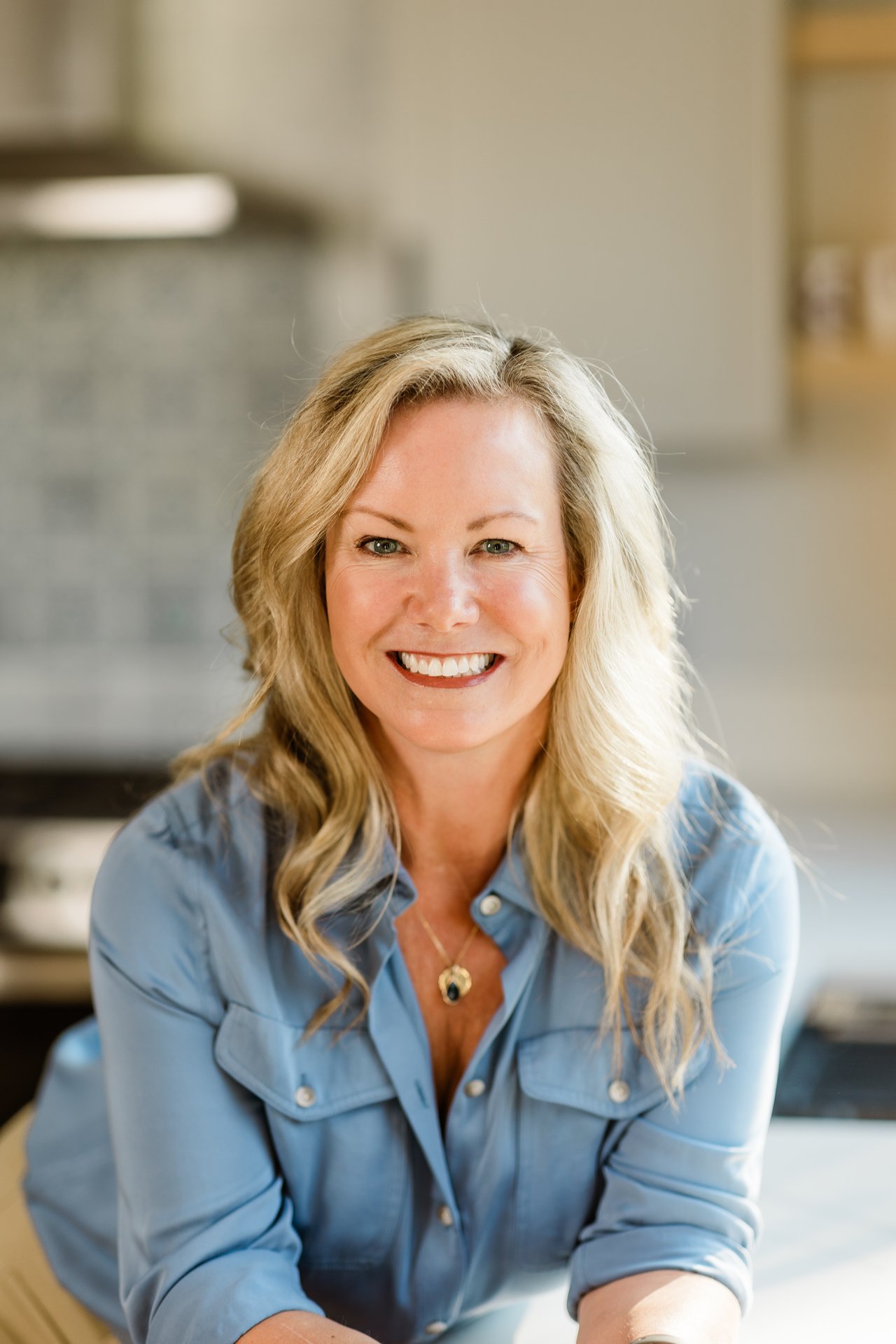
807 W Front St,,I was raised in Cincinnati. My dad was a professor at U.C. and so we were fortunate to have the entire summer to spend on North Lake Leelanau. Summers in Leelanau were such a gift. Starting at the age of twelve we were able to drive the boat into town or to the yacht club. My days were jam-packed. I would teach sailing school at the Leland Yacht Club in the mornings, then take a nap on the dock or the beach, shower, then drive into Leland where I had a job as a hostess. My sisters and I did this every summer and when we had a driver's license we had more options for employment. I stashed away thousands of dollars every summer (literally in a shoe box). Yes, we worked our tails off, but it really did not seem like it since we were enjoying all the beauty of Leelanau at the same time.
I graduated from Miami of Ohio and after graduation I bought the Riverside Inn with my mother and my sister. I later sold my shares when I realized that being a single parent did not pair well with working late nights. After that I was fortunate enough to spend about a decade as a full time parent and I cherish every moment of those years with my (now adult) kiddos, Mackenzie and Sean.
Whether you are an experienced investor or a first-time buyer, Leelanau Living Realty Group can help you find the property of your dreams. Please feel free to browse our website or let us guide you every step of the way by calling or emailing us to set up an appointment today.